 PLOT LUCK
Kiel Ranch — 1875
A spring-fed oasis, a working ranch, deadly nineteenth-century disputes, and a rare surviving trace of the Las Vegas Valley before its big-city boom.
Is it worth visiting?
- Access / admission
- Public park pathways and landscape; fenced historic structures are restricted.
- Suggested time
- About 20–45 minutes for a respectful walk.
What to expect
Kiel Ranch is a low-key stop that rewards curiosity about the Las Vegas Valley before the Strip. The oasis setting and preserved adobe-era history tell a story that would be easy to overlook in a busier neighborhood.
Before you go
Stay on designated pathways and outside the fenced adobe area. Do not enter the adobe building or remove objects from the grounds; this is a protected historic landscape.
Check official visitor information and updates ↗
PlotLuck editorial visit rating (not a Google review score). Conditions, access and fees may change. Information checked October 17, 2026; verify with the venue before traveling.
Before the ranch: water in the desert
There is a reason so much early Southern Nevada history follows its springs. Long before the city of North Las Vegas existed, naturally available water supported plant and animal life and attracted human communities to what might otherwise seem an inhospitable desert. Paiute people occupied and used this broader landscape long before Euro-American settlement. In the 1850s, Mormon missionaries attempted an agricultural outpost here, part of the region's early colonization story.
Kiel Ranch was never simply a house in an empty desert. It grew from an oasis whose land and water had already mattered to generations of people. That continuity is easy to miss in a modern neighborhood of roads, warehouses, parks, and new houses.
Conrad Kiel and a nineteenth-century ranch
Nevada's official historical marker dates Conrad Kiel's establishment of the ranch to 1875. Along with the nearby Las Vegas Ranch, it was one of only two major ranching operations in the valley during the nineteenth century. The property included irrigated land and served the practical demands of ranching and travel in a region where water was precious.
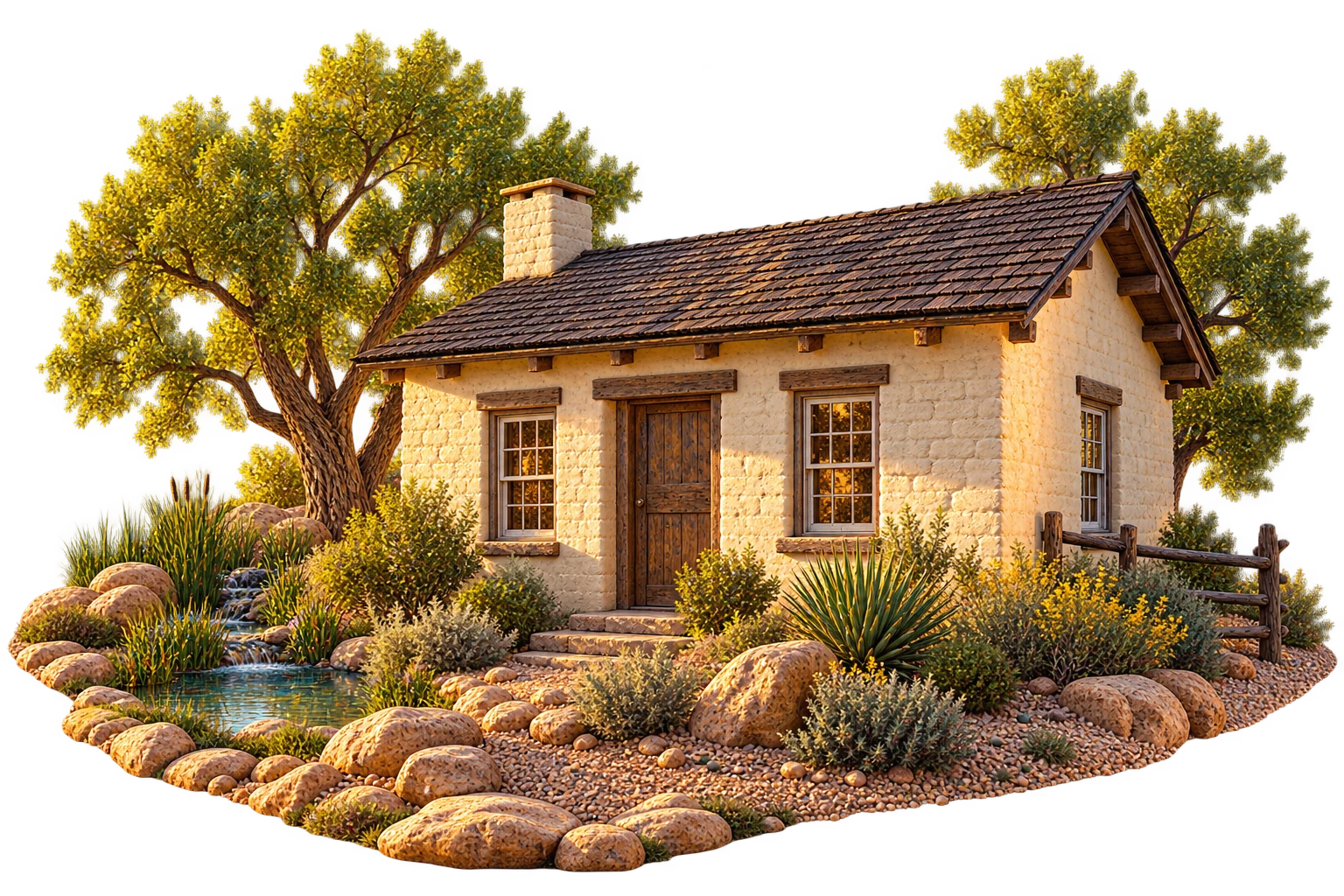
The site also preserves structures and remnants that bear witness to more than one building era. A surviving adobe and the small cottage known as the Doll House are especially significant; the modern park interprets these remains rather than recreating an entire frontier complex. That is why Plot Luck's approved artwork uses a deliberately stylized cottage and spring, not an assertion that one exact building looked as pictured in 1875.
The violence behind the quiet landscape
In 1884, neighboring rancher Archibald Stewart was killed in a gunfight at Kiel Ranch. His widow, Helen J. Stewart, went on to play a significant role in the development of Las Vegas. A second tragedy followed in October 1900, when Edwin and William Kiel were found murdered on the ranch. These events remain part of the site's written historical record and add a darker layer to a place now known for its peaceful greenery.
It is tempting to present the frontier as a simple story of hardy pioneers triumphing over harsh land. Kiel Ranch tells something less tidy: access to property, water, and livelihoods could create fierce disputes and real danger. The people involved left long consequences for the valley's families and institutions.
From railroad land to a dude ranch
After the Kiel period, the property changed hands as railroad interests moved through Southern Nevada. The railroad's purchase in the early 1900s reflected a wider transformation: the valley was becoming connected to transportation routes and investment networks that would lead to modern Las Vegas. Later owners developed the property and used it for new forms of ranching and hospitality.
In the twentieth century, the Boulderado Dude Ranch became one of its more unusual chapters. During the era when Nevada attracted visitors seeking quick divorces, guest ranches offered places to stay and pass the waiting period. Kiel Ranch thus took on a new identity even as the surrounding area urbanized.
Saving an oasis inside North Las Vegas
The ranch's historic footprint shrank as the city developed around it. Preservation efforts in the 1970s helped secure surviving land and structures for public stewardship, and the site became recognized on the National Register of Historic Places. Today Kiel Ranch Historic Park provides walking paths, interpretive signs, protected buildings, and a spring-fed pond that recall the role of water in the valley's growth.
The City of North Las Vegas has also invested in the park's living landscape. Recent improvements added pathways, shade, and a restored orchard with fruit trees, connecting past agricultural practices to present-day community use. The park is not a frozen movie set; it is a living public space whose caretakers are balancing history, access, and ecological protection.
What to notice when you visit
Watch how the landscape changes around the spring and water. The mature trees, reeds, orchard areas, and small surviving structures show how a reliable water source shapes human settlement even when the surrounding city looks radically different. Take time with the interpretive panels; they connect the names, dates, and surviving artifacts to the site in front of you.
Respect the fenced historic adobe, the pond, and protected natural landscapes. The City asks visitors to remain on designated paths, paved surfaces, and turf. Plot Luck places its reward on a public approach plot near the park rather than requiring entry into a protected building, fenced area, or wetlands. Check your route and posted park hours before visiting.
Why it belongs in Plot Luck
In a Las Vegas discovery collection filled with brilliant neon and modern icons, Kiel Ranch provides a different kind of landmark. It is about the preciousness of water, early communities, the risks of ranch life, historic preservation, and the remarkable persistence of an oasis through more than a century of rapid growth.
An eligible live Real GPS visit in Plot Luck can open the City of North Las Vegas's official park history page. After returning to the game, a player can receive the standard daily Upgrade Token award, within the shared 50-token daily limit for landmarks and Easter eggs. Reading this article by itself does not award tokens.
Before the skyline, there was water—and a ranch with stories to tell.
Sources & further reading
- Nevada State Historic Preservation Office — Kyle (Kiel) Ranch
- City of North Las Vegas — Kiel Ranch Park Expansion and Orchard
- City of North Las Vegas — Parks and Kiel Ranch visitor rules
- Library of Congress — Historic American Buildings Survey, Kiel Ranch
Plot Luck's stylized art is an imaginative visual interpretation, not a measured reconstruction. The historical dates are grounded in the linked sources; the exact visitor GPS plot should be confirmed in an on-site test before wider release.