 PLOT LUCK
Las Vegas’ First Telephone — 1907
Before Las Vegas was famous for neon, a telephone with the remarkably simple number 1 linked a new railroad town to the outside world.
- Era
- 1907
- Historical site
- Former Hotel Nevada, at Main and Fremont Streets, Las Vegas
- In Plot Luck
- Adjacent public Fremont Street plot; a GPS-gated discovery with no casino website handoff.
Is it worth visiting?
- Access / admission
- There is no verified publicly displayed original telephone to visit at the former exterior location.
- Suggested time
- No dedicated trip recommended.
What to expect
The first telephone is a fun piece of early Las Vegas history, but its former outdoor display is no longer a dependable attraction. The hotel’s historical location and the physical object should not be treated as the same thing.
Before you go
We have not verified where the original telephone is currently displayed. PlotLuck does not recommend a casino visit just to look for an item that may have been moved.
PlotLuck editorial visit rating (not a Google review score). Conditions, access and fees may change. Information checked October 17, 2026; verify with the venue before traveling.
What a single telephone number tells us
On today's Fremont Street, phones are everywhere. In 1907, however, Las Vegas was barely two years beyond the railroad land auction that established its townsite. A small settlement could still be transformed by something as ordinary to us as placing a call. Early telephone lines brought news, orders and human voices into a desert community that otherwise relied on face-to-face conversation, written messages and railroad connections.
One of the city's first memorable technological milestones took place at the Hotel Nevada, which opened in 1906 on Fremont Street. The city's first telephone was installed there in 1907. Its number was simply 1. Local newspaper accounts later noted a bronze plaque outside the building commemorating the event. A number so short now seems almost comical, but it captures the scale of the young settlement better than almost any population statistic.
This is not a story about a modern casino or a place to gamble. The site matters because it is a tangible clue to the early town's communications infrastructure. The Hotel Nevada name predates the much later Golden Gate identity; we keep the original name prominent to place the discovery in the right period.
Charles “Pop” Squires and the growing network
Charles P. “Pop” Squires was an early Las Vegas newspaperman and entrepreneur involved with the city's development. PBS's Las Vegas historical timeline records the arrival of telephone wires on Fremont Street in 1907, installed in Squires's Hotel Nevada office. In a place where the nearest established communities could feel very far away, a wired telephone network promised much faster communication for daily business and emergencies.
UNLV's Southern Nevada Telephone Company archival collection helps fill in the next chapter. Its historical note traces the company's origins to a 1907 effort by Squires to establish a magneto telephone line from a wholesale feed business to his ranch. A later company name was Consolidated Power and Telephone Company. By 1923, the phone company had expanded to 200 subscribers and needed a larger office.
That progression matters: telephone number 1 is an engaging detail, but the longer story is about how a town built networks as it grew. Communication did not arrive all at once as a modern system. Lines, businesses, offices and subscribers accumulated until the original novelty became ordinary infrastructure.
The Kellogg telephone and the surviving memory
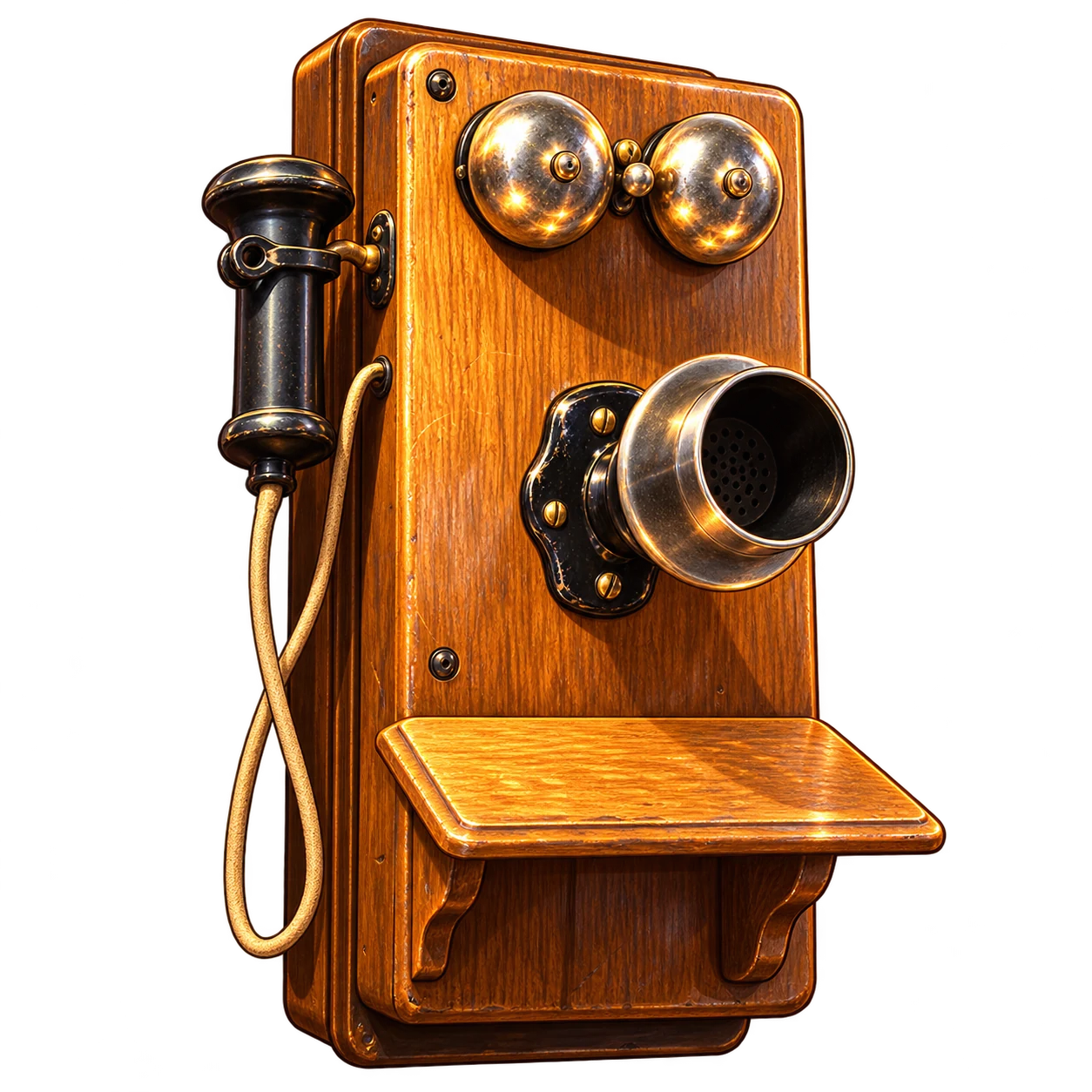
The antique object pictured in Plot Luck's reference photographs is a 1907 Kellogg wall telephone: a varnished wooden cabinet, two metal bells, a projecting speaking tube and a separate receiver resting at the side. These details make it instantly recognizable as an early telephone, even to someone who has never used one. They also explain the choice of game artwork: the telephone itself is the historical icon, rather than the building that once displayed it.
A Las Vegas Sun account from 2000 described an antique Kellogg telephone displayed inside the hotel as a reminder of the city's telephone history, while noting that the commemorative bronze plaque had been mounted outside in 1980. The displayed artifact was described as a relative of the hand-cranked original, not necessarily the exact first instrument used. Exhibits change; this page does not promise that the old telephone or its display case can still be seen.
Plot Luck represents the location from a nearby public Fremont Street grid cell so its telephone illustration does not collide with a separate shrimp-cocktail discovery at the historic property. The map placement is a virtual gameplay marker for the history of the site, not a claim that the phone is physically located at that precise pavement coordinate.
Why it belongs in Plot Luck
Las Vegas history is often told as a parade of bigger hotels, brighter lights and increasingly expensive attractions. The first telephone goes the opposite way. It asks us to picture a smaller town, one in which a single connection mattered enough to be remembered for generations.
The illustrated phone can be found on the in-game map, and the game's normal live Real GPS requirements govern its daily Upgrade Token reward. Unlike some other history discoveries, this one has no outbound website interaction when the player taps it. Reading this public article does not unlock or collect any in-game reward.
Sources & further reading
- PBS American Experience — Las Vegas Timeline (1907)
- Las Vegas Sun — Las Vegas Has History of Its Own (2000)
- UNLV Special Collections — Southern Nevada Telephone Company collection
Research links lead to independent historical or archival sources, not a casino website. Display and access information can change.